
Loading...
Serving Oakley, CA and surrounding areas. (925) 993-4106
Cracked, flaking, or uneven garage floor? We handle permits, proper base prep for Oakley clay soils, and a clean finish you can park on in a week.
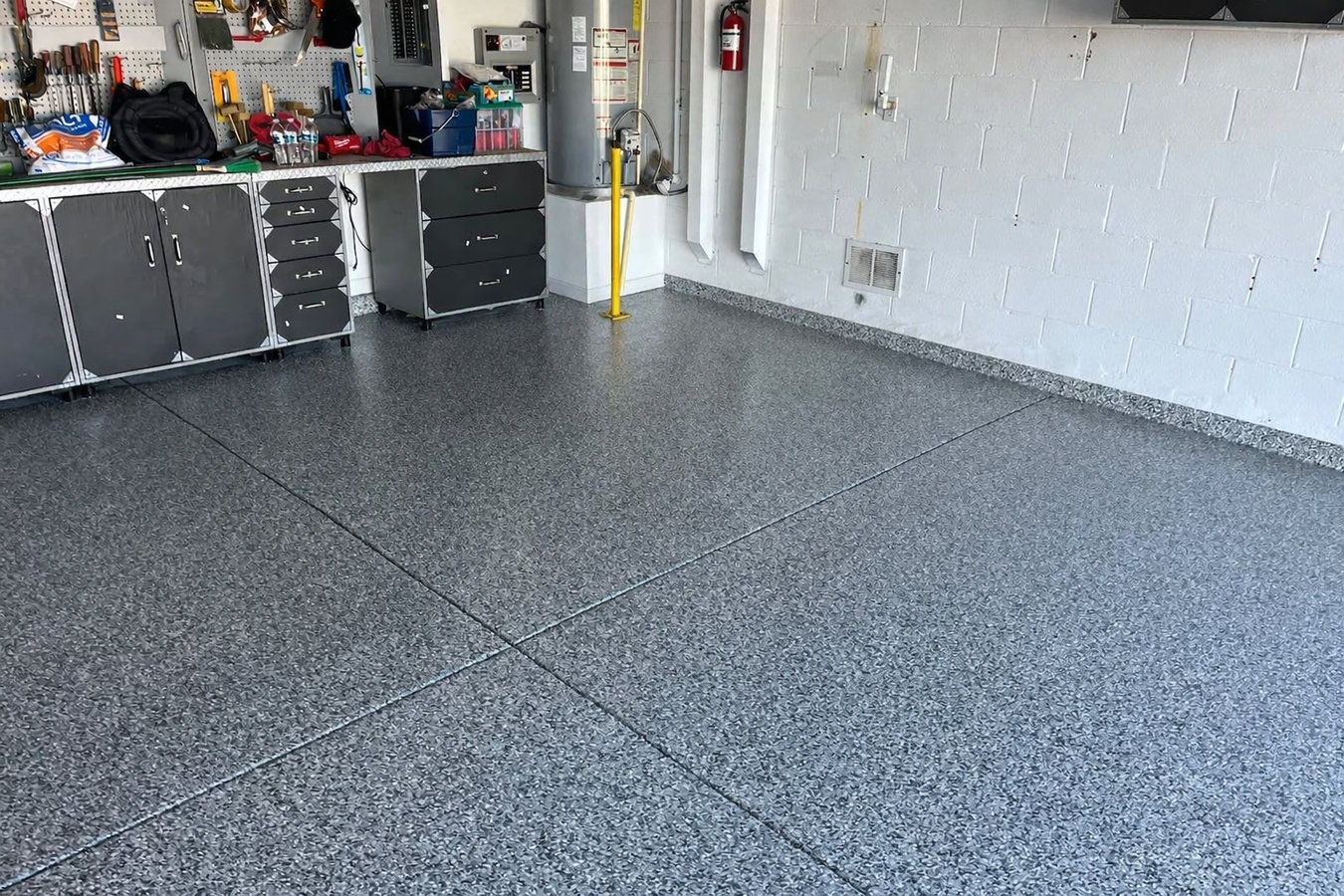
Garage floor concrete in Oakley involves removing the old slab, preparing the ground underneath for local clay soil conditions, and pouring a new slab to a level, finished surface - most jobs take one to two active days, with parking-safe in about a week.
Oakley homes built during the rapid growth of the late 1990s and early 2000s are now old enough that original garage floors are showing real wear - cracking, surface flaking, and low spots that pool water. A new floor is more cost-effective than continued patching, and it gives you a clean slate you can actually do something with.
If your garage floor is in rough shape and you have been thinking about a coating, pairing the replacement with decorative concrete finishing is a smart move - the coating goes on once the new slab has fully cured and dramatically extends the floor's useful life.
Hairline cracks that have grown wider, longer, or developed edges sitting at different heights are a sign the ground underneath is shifting - common in Oakley clay soils. Patching the surface does not fix what is happening below, and a full replacement with proper base prep is the right call.
If you see a fine gray powder when you sweep or the surface looks like it is peeling in thin layers, the top of the concrete is deteriorating. This is especially common on Oakley slabs from the early 2000s that were poured quickly in high heat. A floor in this condition will not hold a coating and typically needs replacement.
Garage floors should shed water toward the door or a drain. If you notice low spots where puddles form, the floor has settled unevenly or was never poured level. Standing water accelerates surface wear and can work its way under the slab, causing further damage over time.
A musty garage even when closed up - or items stored on the floor that feel damp on the bottom - points to moisture wicking up through the slab. This happens when the original pour lacked a moisture barrier, which was a common omission in older construction. A new floor with proper moisture protection addresses the problem at the source.
We handle everything from full slab demolition and replacement to new pours for garage additions and conversions. Every job starts with proper subgrade preparation - compacting the soil, adding gravel, and installing a moisture barrier where needed - because that groundwork is what determines whether a floor lasts five years or fifty. Once cured, many customers follow up with decorative concrete coatings for a finished, protected surface, or choose concrete floor installation for adjacent utility areas.
We also handle permit filing with the City of Oakley Building Division - from application through final inspection. You do not need to make a single call to the building department. All work is done by state-licensed contractors, and we give you full documentation so your project is on record.
Best for floors with structural cracks, heaving, or deterioration that cannot be addressed with surface repair alone.
For additions, conversions, or homes where no slab previously existed - poured to the right thickness for the intended use.
Four inches is typical for passenger vehicles; five to six inches recommended if you store heavy equipment or an RV.
For homeowners planning to add an epoxy or sealer coat after curing - we finish the surface to the right profile for proper adhesion.
Oakley sits in the eastern end of Contra Costa County on clay-heavy soils that expand with winter rain and shrink back in summer heat. That seasonal movement is the primary reason garage floors in this area crack prematurely - not just age. A slab poured without proper compaction and a gravel base will show stress fractures within a few years. Homeowners in Oakley and Brentwood deal with the same soil conditions, and we account for both when preparing the base.
The Delta proximity adds another layer - morning and evening humidity near Oakley means moisture can wick up through a slab that was never properly sealed underneath. Summers that regularly push into the 90s also demand that pours be timed for early morning to prevent the surface from drying too fast and weakening at the top. These are not abstract concerns - they are what separates a floor that lasts 30 years from one you are patching again in five. The Portland Cement Association publishes guidelines on hot-weather concreting that we follow on every summer pour.
We ask about your garage size, whether there is an existing slab, and what you want to end up with. Most jobs require an on-site visit before we give a firm number - site conditions and access for equipment both affect cost. We reply within one business day.
Garage floor replacements require a city permit. We file the application with the City of Oakley Building Division and keep you updated on timing. Permit processing typically adds a few days before work starts.
You empty the garage; we handle the rest. Day one is demolition and subgrade preparation - grading, compacting, and gravel if needed. Day two is the pour, finishing, and control joint cutting. The crew leaves the site clean.
The slab needs about 48 hours before foot traffic and a full week before you park on it. City inspection happens after curing. Once the inspector signs off, you are done - or we schedule the coating if that was part of the plan.
No obligation. We come to you, assess the slab, and give you a clear written price - permits and all.
(925) 993-4106We file the permit with the City of Oakley Building Division and coordinate the city inspection. You never have to call the building department, and the finished job has documentation you keep for resale or insurance.
Every pour starts with proper subgrade compaction and a gravel base layer that accounts for the seasonal movement in eastern Contra Costa County soil. Skipping this step is the most common reason floors in this area crack early.
Oakley summers regularly hit the 90s. We schedule summer pours for early morning and take active steps to keep the surface moist while it cures - because heat-damaged concrete shows up as cracking and surface weakness within the first year.
California law requires a valid license for any concrete work over $500. You can verify our license through the California Contractors State License Board at cslb.ca.gov - it takes about 30 seconds and tells you the license is current and in good standing.
A garage floor done right lasts 30 to 50 years. The difference between a floor that holds and one that cracks in five years is almost always what happens before the concrete truck arrives - and that preparation is where we put our effort.
Upgrade your garage floor with a stained or sealed finish that protects the surface and improves the look of your space.
Learn MoreNew concrete floors for interior spaces, utility rooms, and workshops - poured and finished to the same standard as any exterior slab.
Learn MoreSchedule now before summer - early pours get the best conditions and lock in your spot on the calendar.